

The $2 Billion That Changed the Rules: Why Taylor Swift Gave Nearly $200 Million Back to Her Team
December 28, 2025
News
Back to all news
The $2 Billion That Changed the Rules: Why Taylor Swift Gave Nearly $200 Million Back to Her Team
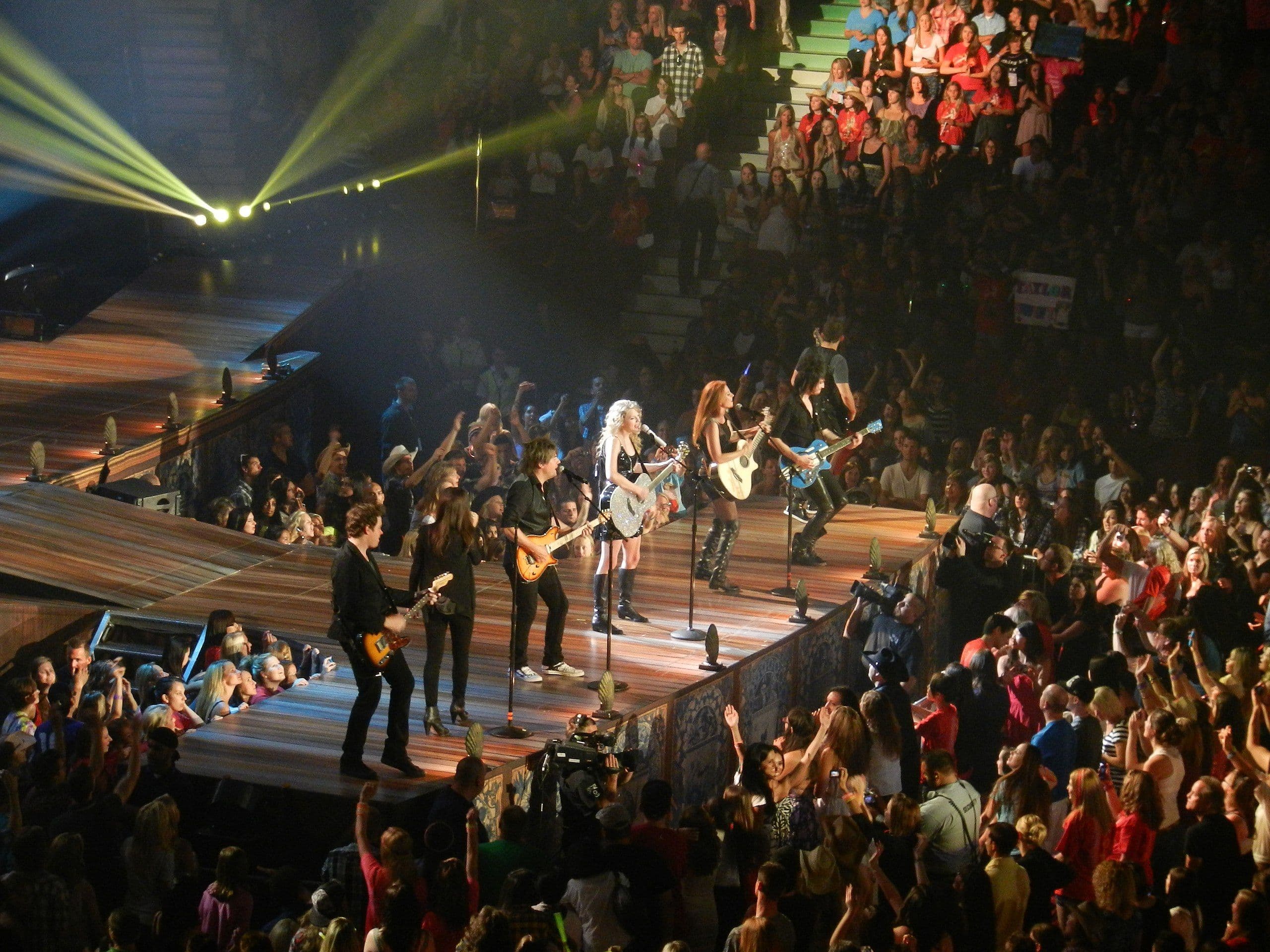
When The Eras Tour officially crossed the $2 billion mark in gross revenue, it stopped being just another record. The music industry is used to big numbers, but in this case, scale itself became secondary. The truly defining moment came later — when Taylor Swift made the decision to redistribute nearly $200 million among the people who actually made the tour possible. Dancers received sums equivalent to several years of their regular income. Truck drivers who spent months moving stages, lights, and sound systems across countries were handed bonuses comparable to a full annual salary. Technicians, stylists, security staff, production crews — those usually invisible to the public suddenly found themselves at the center of the most striking financial story the live music business has seen in years. This was not a symbolic gesture. And it was certainly not accidental. The Economics of the Tour: Why This Was Even Possible The Eras Tour was never just a series of concerts. It was a long-term brand project designed as a vertically integrated ecosystem. Ticket sales, merchandise, partnerships, theatrical distribution of the concert film, streaming rights, licensing — the tour functioned as a multi-channel business with control over nearly every major monetization point. When an artist at this scale generates $2 billion in revenue, redistributing a portion of that income is not a threat to financial stability. It is a strategic decision. And Swift chose a strategy rarely seen in the industry: sharing success with those who carry the operational weight of the project but have no public-facing profile. This Is Not Charity. This Is Loyalty Management Touring has a structural problem: extreme staff turnover. The best professionals move from tour to tour, forcing artists to constantly rebuild teams, re-explain standards, and re-establish trust. Swift effectively solved this problem for years ahead. When a dancer receives an amount equal to several years of earnings, they remember more than a contract — they remember the brand. When a truck driver realizes their contribution was recognized not formally, but meaningfully, they stop being just an employee and become an advocate. This is not audience LTV. This is team LTV — a rare and extraordinarily powerful management move. A PR Effect You Can’t Buy Directly Every PR campaign has a shelf life. Even the loudest announcements fade. But stories where money follows values rather than replaces them tend to last much longer. Swift didn’t issue a press release declaring her generosity. The story spread organically — through people, emotions, and human reactions. This kind of reputation cannot be manufactured with marketing tools. It only emerges when actions align with a brand’s internal identity. In the eyes of the audience, one message became clear: Taylor Swift’s success is built on collaboration, not extraction. A Shift in the Industry Power Balance This decision created an uncomfortable precedent. After The Eras Tour, it became harder for stadium-level artists to justify why teams working on billion-dollar productions should only be paid “market rate” without sharing in the upside. Swift didn’t just earn more than anyone else. She reset expectations — for artists, for crews, and for the public. Conversations about fair value distribution in live music are no longer theoretical. Sincerity vs. Calculation: A False Dichotomy These decisions are often framed as a choice between genuine emotion and cold business logic. In reality, that opposition is artificial. The strongest brands are built precisely where emotion and strategy overlap. Yes, this strengthens the brand. Yes, it increases team loyalty. Yes, it reinforces long-term reputation. But none of that cancels out a simple truth: a person who has evolved from a country singer into the architect of the biggest tour in history understands the value of people. And uses money as a tool — not as an idol. What Will Remain After The Eras Tour Years from now, the $2 billion figure will be surpassed. Records always fall. What will last much longer is something else entirely: a new model of relationships between artists and the people behind the stage. The Eras Tour will be remembered not only as the highest-grossing tour of all time, but as the moment when popular culture was forced to acknowledge a deeper truth: real brand power is measured not just by revenue, but by how that revenue is shared. And in that sense, Taylor Swift played a game the industry will be analyzing for years — not by its notes, but by its consequences. Photo by Andy L / CC BY 2.0 / link to license https://creativecommons.org/licenses/by-sa/2.0/deed.en / link to original https://commons.wikimedia.org/wiki/File%3ATaylor_Swift_-_Long_Live_-_Speak_Now_Tour_in_Vancouver.jpg